
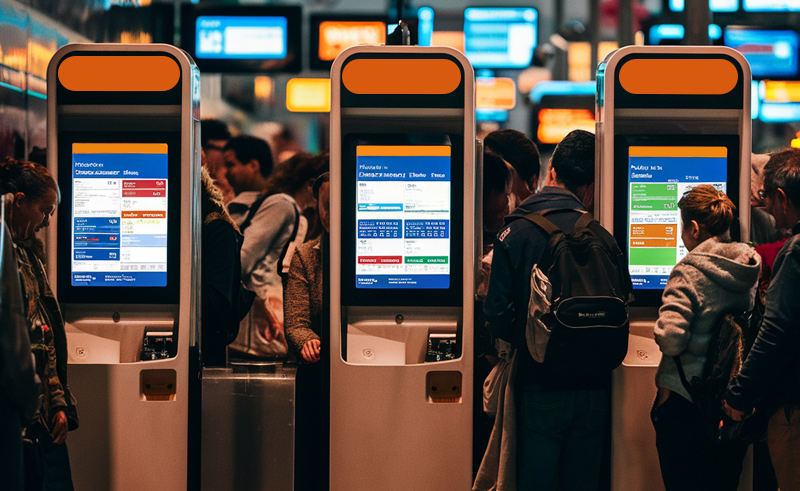
The Impact of Self-Service Kiosks on Public Transportation Systems
In todays’ fast-moving and dynamic world of public transportation, efficiency and convenience have immense significance. Both theses aspects have fueled the adoption of self-service kiosks in public transportation sector. The role of self-service kiosk machines is not just limited to ticket dispensing. There are several other rewarding benefits too like providing real-time travel updates, navigational support, real-time monitoring etc.
In this blog, we will delve into the role of self-service kiosks in public transportation in detail, covering the benefits both in the customer’s and service provider’s perspective.
In the later part of the blog, I’ve also furnished a brief case study of Panashi’s Airport kiosk project in Angola, Africa, citing the usefulness of airport check-in kiosk machines.
Take your time to go through the blog, and let me know your valuable feedbacks too.
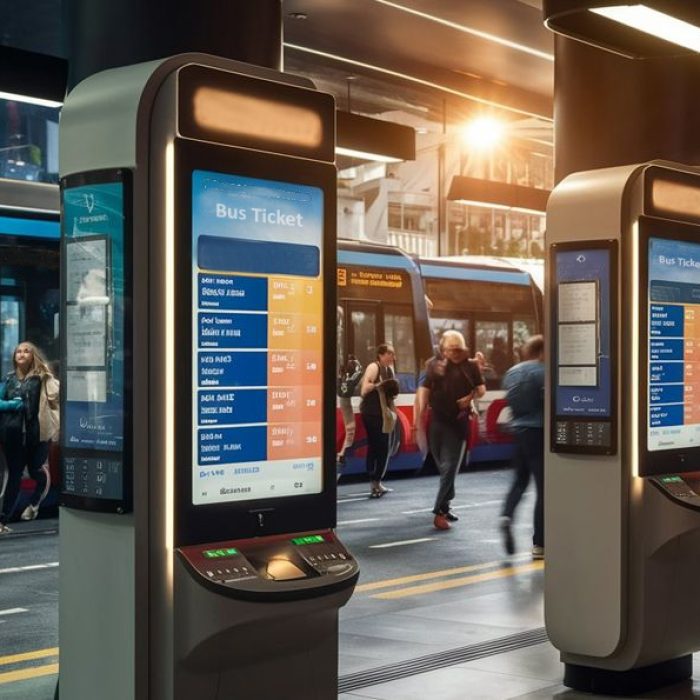
Certain noteworthy public transportation statistics of UAE & Africa
- - Based on Global Competitiveness Index ranking, the United Arab Emirates was ranked No.1 in 2023 for Quality of Air Transport Infrastructure.
- - The Legatum Prosperity Index on Public Transportation Satisfaction, the UAE is ranked 6th, globally.
- - The public transportation market in Africa is predicted to generate US$8.39 billion in revenue by 2024. From 2024 to 2028, revenue is expected to increase at a yearly rate of 3.13%, with a predicted volume of US$9.49 billion by that time.
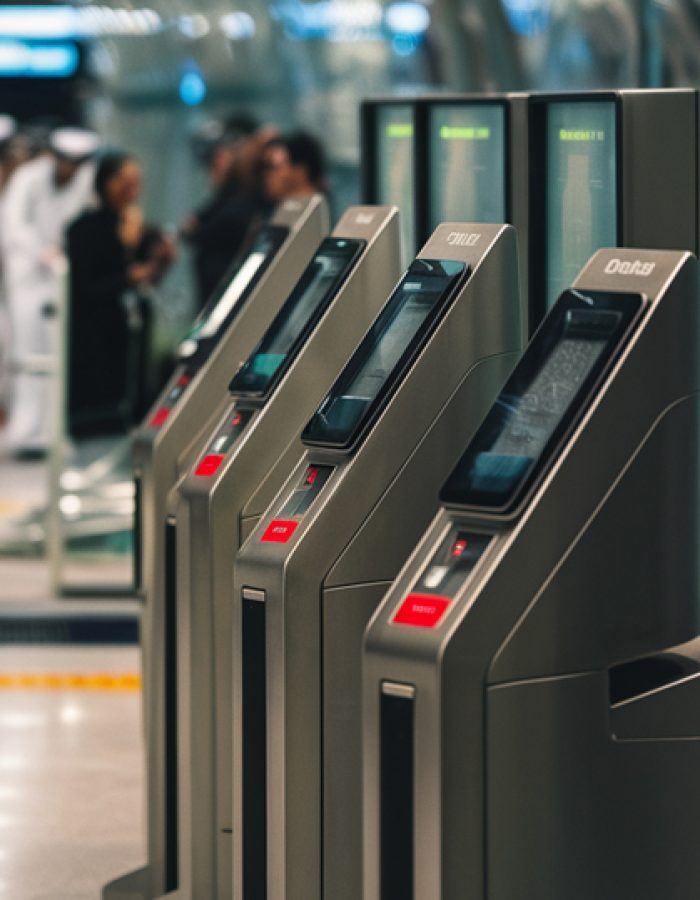
The role of self-service kiosks in public transportation sector
Self-service kiosks play an integral role in public transportation sector, especially in automating the ticketing process, improving the operational efficiency and enhancing passenger experience. Now, let’s examine those roles in detail.
1. Convenient passenger ticketing – Would you appreciate waiting in long lines at the ticket counter to purchase your ticket? Manual ticketing can be time-consuming and it may involve human errors too which affects passenger experience. Self-service kiosk automates the ticketing tasks in a wide range of public transportation hubs like airports, railway stations, etc. with utmost precision and efficiency.
2. Perform automated booking/reservation – Gone are those day when passengers where required to show up at the booking office, early in the office hours, and wait in the queue to reserve their travel tickets. Now, self-service kiosks allow passengers handle the process all by themselves. The passengers can easily do the booking, edit the booking information, and even perform cancellation with few taps on the screen!
3. Passenger check-in and boarding pass issuance – I wouldn’t hesitate to say that self-service kiosks have revolutionized the passenger check-in formalities in airports. Most of the busy airport terminals across the globe have already realized the benefits of deploying interactive airports kiosks in airport premises.
- Airport check-in kiosks are usually loaded with components like passport scanner, card reader, camera, biometric reader etc. to speed up airport check-in process.
- The customers can easily provide their flight confirmation code/credit card information via the check-in kiosk, as part of passenger identification, and get their boarding pass printed easily in a couple of minutes!
- The airport staff needn’t have to handle the passengers and make them wait in the long queue to issue boarding passes. As a matter of fact, utmost convenience for both the airport authorities and the passengers.
4. Baggage dropping and tracking at airports – You might have used the baggage dropping facility in renowned airports. The self-service baggage dropping is yet another worth-mentioning facility that improves the overall operational efficiency of airports. Passengers feel highly empowered to tag and drop their luggage single-handedly without any human intervention. Most importantly, the passengers can accomplish this task at their own pace giving maximum control.
- Another striking aspect that empowers customers is the baggage tracking facility. This can be done by integrating RFID technology with airport baggage systems. To add on, passengers can make use of self-service kiosks to check the current status and location of the checked-in baggage. It’s a rewarding experience for passengers. Isn’t it?
- Upon entering passenger details, flight information, and baggage information, you could easily access the real-time status and location of your luggage. Hence, no worries!
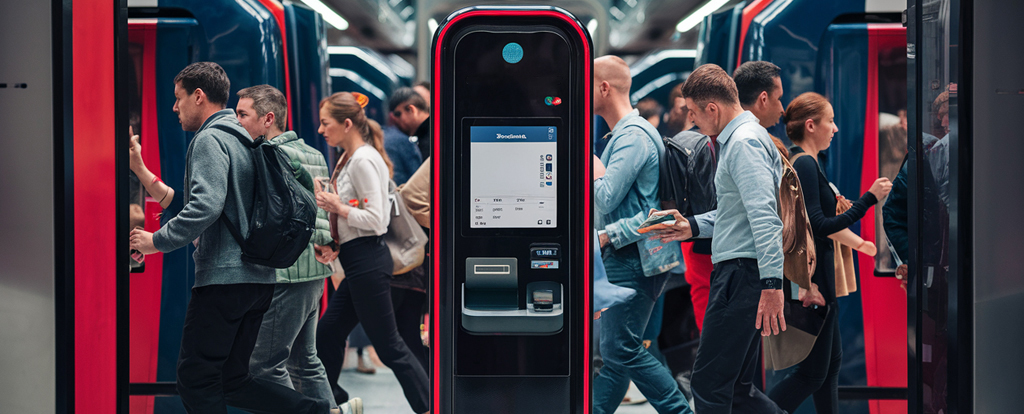
5. Information dissemination – Self-service kiosks serve as a reliable and effective information dissemination portal for airports, railway stations, bus terminals, sub way systems, water metro stations, in busy junctions etc.
Transportation has much to do with publishing the most updated and relevant information and “TIME” is an important factor.
Passengers appreciate the service providers when they get to access relevant, accurate information on a time-bound manner.
A. Exterior cleaning of the kiosk machine
Information dissemination aspect is mutually beneficial for both the service operators as well as the users. Let’s go through some of those benefits.
- Provide real-time data –Passengers can easily access real-time data via self-service kiosks with a few clicks or taps avoiding human interaction. Kiosks display a plethora of information such as departure, arrival, schedules, service cancellations, etc. The service providers can even issue warnings, emergency messages, updates, reschedules and other events via the self-service kiosks, and keep the passengers informed and updated.
- Wayfinding and navigation – Large transportation hubs require effective navigation systems and maps to guide passengers. Entrusting human employees for these tasks can create havoc in busy airports or railway station settings. Self-service kiosks serve as interactive wayfinding solutions for passengers to navigate large transit hubs. Interactive maps provide a detail-oriented sketch of the premises which includes directions to passenger facilities like food courts, wait rooms, rest rooms, prayer rooms etc.
- Advertisements and promotions – The footfall in transit hubs is generally high. Service providers and their partners can display ads or other promotional materials via self-service kiosks. The interactive touchscreens support high quality creative ads, eye-catchy videos, or animations, special offers etc. Kiosks serve as an excellent platform to easily gain the attention of passengers, and thereby, generate revenue.
- Avoid direct sunlight – Store the kiosk away from direct impact of the sunlight as harmful UV rays can adversely affect kiosk screen functionality.
6. Improved accessibility for passengers with disability –Self-service kiosks designed with accessibility embrace inclusiveness. People with disability should be able to access the facilities offered by interactive kiosk machines just like any other human being. What I personally feel is that, all transportation hubs must be equipped with feature-packed disability kiosks to address the needs of the differently-abled.
Panashi Accessibility kiosks are equipped with disability-friendly features like tactile keypads, screen magnification software, speech-to-text and text-to-speech functionality, adjustable screen brightness functionality and many more.
7. Passenger feedback – Self-service kiosks present an excellent opportunity to the gather valuable passenger feedback. Passengers can easily enter their feedbacks via the kiosk interface. Analyzing the passenger feedbacks helps you identify any room for improvement.
Implementing self-service kiosks in transportation hubs - Benefits
Service provider benefits
- Avoid long lines - With self-service automation the authorities can avoid the long lines in front of the counters.
- Improved utilization of space - self-service kiosk systems require less space compared to the traditional counter-based settings. Hence the authorities can better utilize the premises of the transportation hub.
- Enhanced operational efficiency – The check-in and boarding pass issuance procedures take place systematically without human errors and delays which improves the operational efficiency.
- Save labour cost – the self-service kiosk handles the check-in tasks with much precision and efficiency. Therefore, the authorities need not recruit employees to handle the monotonous check-in jobs. The existing employees can be reassigned for tasks that bring in more value to the service provider.
- Real-time monitoring facility – The real-time monitoring facility allows authorities to remotely monitor the performance of the kiosk machine. This helps authorities identify peak-hours, passenger enquiry patterns, and passenger flow in airport premises.
- 24/7 functionality – The self-service kiosk facilitates 24/7, seamless check-in/operations. This means the work hour shifts of the employees or other delays are not going to interfere with the day-to-day operations of the facility.
Passenger benefits
- Convenient check-in – the passengers experience hassle-free check-in, they get their boarding pass printed in a couple of minutes, without standing in the unpleasant long lines.
- Multi-language facility – Self-service kiosks are equipped with multi-language facility. Passengers of diverse nationalities can select their preferred language from a list of languages and easily access the information displayed on the kiosk touchscreen. The facility is particular helpful in international transit terminals.
- Improved passenger experience – reduced waiting time, fast and efficient check-in, efficient information access, enhanced control – all these factors improve the overall passenger experience. Improving the passenger experience is the tried-and-tested way to improve the ratings of your facility, be it airport, bus depot, or railway station.
Case study (Airport Kiosk in Angola)
As part of the Airport kiosk deployment project for the Government of Angola, in Africa, Panashi had implemented a feature-rich Airport kiosk. The kiosk machine takes full control of the airport check-in operations which includes printing boarding pass and baggage tagging. The kiosk is loaded with multi-language functionality which helps passengers of diverse nationalities and cultures in Africa. The airport kiosk has become a reliable and dependable “go-to machine” for passengers to access both flight-related and airport-related information.
Conclusion
The use of self-service kiosk in public transportation has several rewarding benefits which are still not leveraged to the maximum potential.
Without an iota of doubt, I would say, UAE has achieved remarkable growth in public transportation sector, especially in the past two decades. Thanks to UAE’s quick urbanization and economic expansion. The role played by the UAE government is worth-mentioning in this regard.
The nation has made significant investments in developing and updating its infrastructure within the last ten years. After its 2009 introduction, Dubai’s Metro system has grown to rank among the most sophisticated in the world.
The much-awaited, million-dollar Dubai Hyperloop project and the testing of driverless cars showcase UAE’s insatiable determination for innovation in public transportation sector.
And of course, Africa’s public transportation market predictions are promising too.
Let’s hope for the best.
Any assistance or consultation regarding the deployment of self-service kiosks in transportation hubs, please get in touch with our technical experts.