
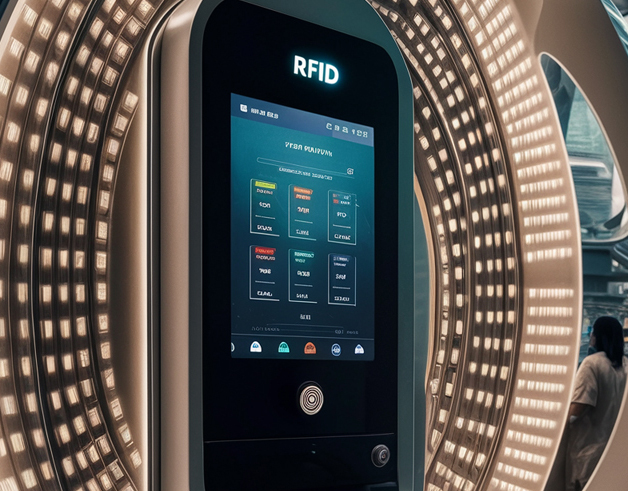
RFID Kiosk Machines: A Key Component in Modernizing Healthcare Facilities
Technology is an indispensable aspect of the modern healthcare industry. Hospitals and healthcare establishments use a plethora of cutting-edge technologies as part of their day-to-day operations. Some of them are directly related to medical diagnosis and treatment, others linked to administration and operations etc. RFID is one among the operational technologies that healthcare industry use to enhance their operational efficiency. The RFID technology never ceases to amaze me, particularly when I think about the benefits associated with implementing the same in hospital environments.
If you are into the hospital procurement department, I suggest you to read this blog to understand:
The UAE and the middle-east landscape, as a whole, presents an excellent opportunity for car wash businesses to thrive. And there are several factors to substantiate the same.
Self-service kiosks present an efficient and affordable opportunity to enhance the operational efficiency of your business, improve revenue generation and enhance customer experience.
Read on to understand the relevance of self-service kiosks for car wash businesses in the UAE.
- RFID technology
- The relevance of RFID kiosk
-
Benefits of RFID in healthcare industry
- Panashi Smart Hospital System
Certain UAE healthcare statistics
Before we delve into the technology and its benefits, let’s go through the latest statistics pertaining to the healthcare industry in the UAE. Based on the research conducted by Mordor Intelligence, the UAE Hospital Supplies market size is estimated to achieve an annual growth rate of 6.40% during the forecast period 2024 – 2029. The key growth-driving factors are growing population of aged citizens, prevalence of chronic illnesses, and increasing public knowledge of illnesses acquired in hospitals.
Based on Statista research, by 2024, the UAE’s medical technology market is expected to generate US$3.12 billion in sales. And by 2029, the market size is projected to reach US$4.72 billion, with a yearly rise of 8.63%.
The worldwide medical technology market is projected to achieve a yearly growth rate of 5.31% during the forecast period 2024–2029. By 2029, the medical technology worldwide market volume is assumed to reach US$775.80 billion.
The statistics shared above are promising to the global healthcare industry.
Understanding RFID technology
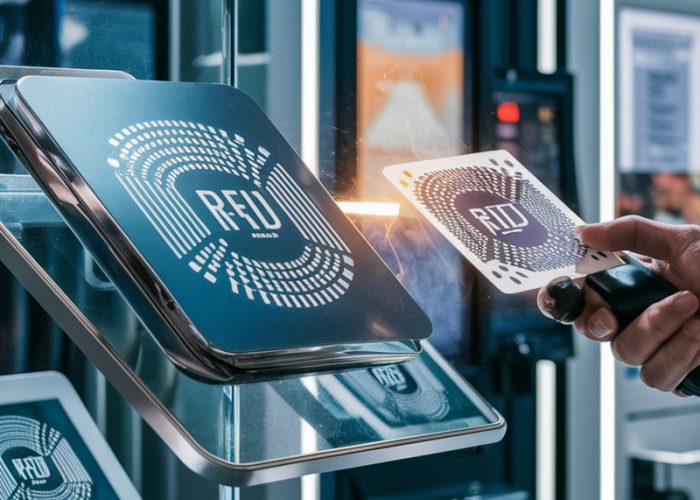
RFID stands for Radio Frequency identification.
The RFID system makes use of the radio wave signals to retrieve relevant data from tagged objects.
The RFID system consists of 3 components and they are.
- 1. RFID Reader – emits electromagnetic waves in a particular frequency and receive signals back from RFID tags.
- 2. RFID Tags – Upon receiving signal from the RFID reader, the RFID tag transmits the data stored in it back to the reader.
Tags are classified into 3 types and they are as follows.
- Passive – an internal power source is absent in passive tags. Therefore, passive tags are powered by the RFID Readers’ electromagnetic field. They have a smaller operating range.
- Active – Active Tags carry an internal power source. And they have a higher operating grange.
- Semi Passive – There is an internal power source in semi passive tags, however, its purpose is to power up the internal circuitry of the RFID tag. To emit signals back to the Reader, the semi passive tags depend on the electromagnetic field generated by the RFID reader.
- 3. Antenna – Signal transmission and receiving are performed by Antennas that are present on both the RFID Reader and Tags.
An interesting fact to note is that RFID does not operate in line-of-sight fashion as in the case of barcode scanning or QR code scanning. Therefore, RFID technology can detect or track multiple tags at the same time, provided the tracking takes place in the specified range.
RFID - working principle
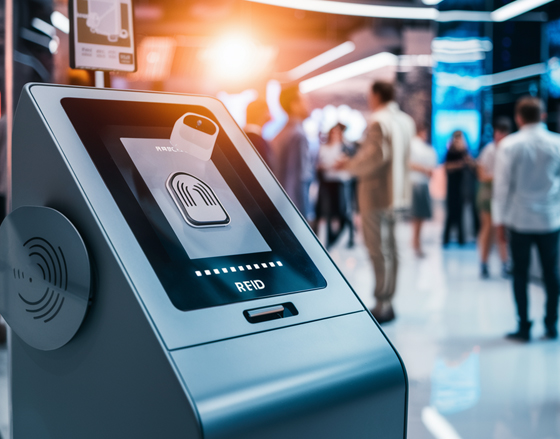
Eliminating all technical concepts, I will explain how these components work in unison to retrieve data from tagged objects, in simple terms.
1. RFID reader signalling – Initially, the RFID reader emits the electromagnetic wave signals.
2. Activation of RFID Tags – The Reader signal activates the tag.
3. Tag data transmission – The activated tag creates a tag response signal, which is transmitted back to the reader. This response signal contains the data stored in the tag.
4. Data processing and storage – the Reader receives the response signal and directs it to the database for processing. The processed data is then stored in the system database.
What is RFID kiosk?
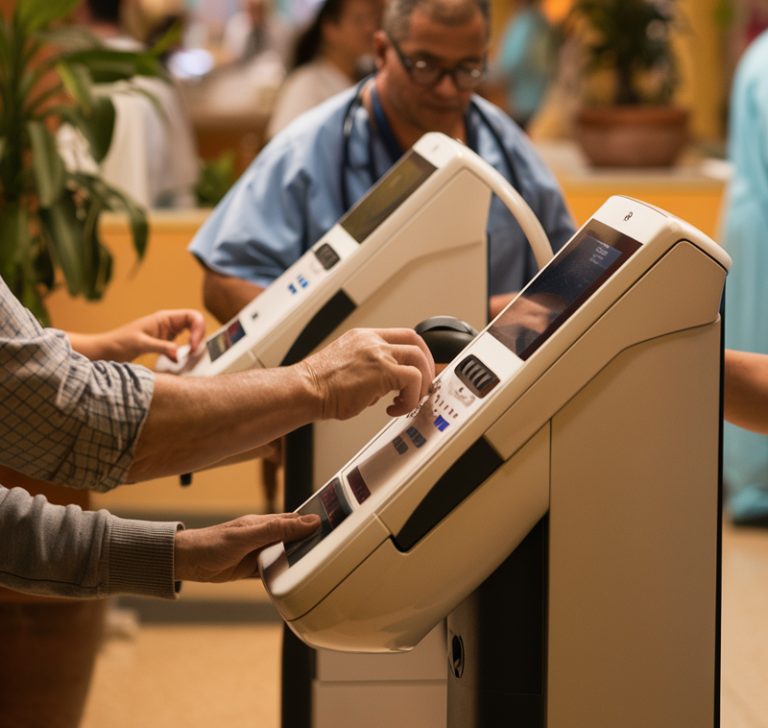
Most of you might have visited a hospital in the peak hours when patients come in large numbers and wait in the reception counter for check-in. Even hospital staff find it difficult to handle the scenario, at times.
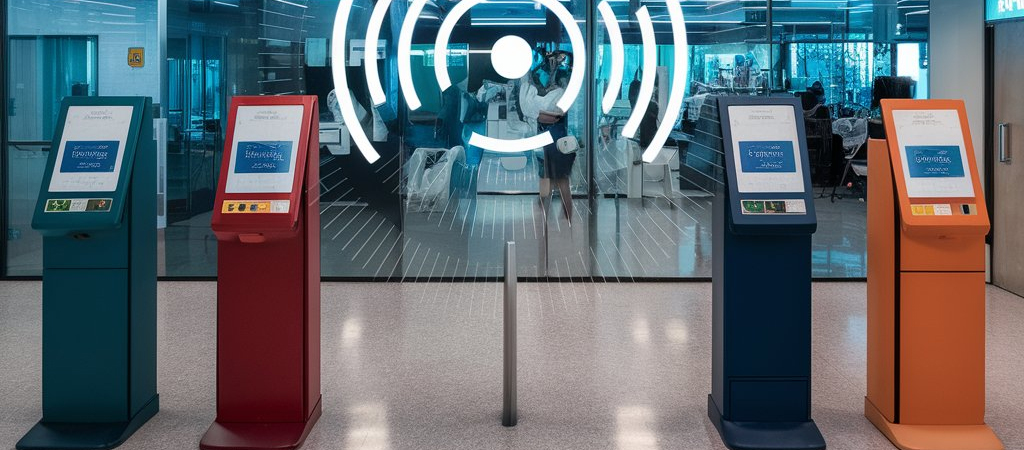
And here comes the relevance of an RFID kiosk. An RFID kiosk is an RFID technology-enabled self-service kiosk machine that improves the overall patient experience by streamlining patient check-ins and simplifying information access.
Here is how the RFID kiosk works.
An RFID-enabled kiosk machine, instantly reads the tagged data of the patient. The tagged data could be on a patient card or a patient wristband or any other tagged object. The data is automatically integrated into the hospital database. The entire process needs just a matter of seconds.
The patient need not manually enter the details on to the kiosk machine or depend on any front desk executive for the same. As a matter of fact, patient check-in become a highly convenient and swift process.
Other than the healthcare sector, RFID-enabled kiosks are extensively used in retail and transportation sectors owing to their benefits. They are even deployed in libraries to expedite the check-in and out process, thereby avoiding human intervention.
Benefits of RFID kiosks
An RFID-enabled self-service kiosk offers several benefits for the patients as well as the hospital management. You may go through some of the crucial benefits below.
- Effortless patient check-in – The patients can perform the check-in tasks in no time through RFID-enabled scanning.
- Reduces wait time – Patients need not wait in the long lines in the reception area waiting for their turn.
- Improved patient experience – Reduced wait times and swift check-in improve the overall patient experience.
- Reduces congestion – Excessive wait times lead to congestion in the hospital premises. By reducing wait times, RFID kiosks reduce congestion to a good extent.
- Minimize human error – an RFID-enabled kiosk facilitates automated data entry which drastically reduce human errors.
- Reduce staffing expenses – By automating the check-in process, the hospital management can reduce staffing expenses.
- Improved operational efficiency – Improved workflow, reduced wait times, and reduced errors improve the overall operational efficiency of the hospital.
What is the use of RFID in healthcare?
Now, let us consider the bigger picture!
The RFID technology has multiple use-case scenarios connected with tracking of hospital assets, resources, patients and others. The uses of RFID in healthcare are listed below.
- 1. Asset tracking – RFID tagged products, equipment, employees, devices, beds and other assets can be tracked for their real-time availability. The hospital authorities may perform this task easily with the help of a mobile app or web application.
- 2. Patient tracking – The RFID wristbands, when worn by patients, help to track their real-time location. Yes, you could get the precise location of the patient which is vital for patient safety and to ensure maximum care. This feature is particularly useful in specific departments like paediatrics, psychiatry and geriatrics where special care and attention are most-needed.
- 3. Handle medication inventory – With RFID, hospitals can monitor the inventory-related information of medications and get instant updates regarding shortages or out-of-date scenarios. The technology also helps to avoid unwanted incidents like theft or any other malpractices.
- 4. Employee tracking – RFID wristbands support tracking of medical professionals like doctors or nurses or other care givers. Employee wristbands are highly useful in emergency scenarios. The authorities may track the current status or location of the employee and call for an immediate help, if the situation demands. This helps authorities make prompt decisions based on real-time data and also to tweak or improve the hospital workflow.
- 5. Visitor tracking – As you all know; not all areas are accessible for the visitors. For examples: an operation theatre or an inventory store. Visitors are denied access for several reasons like ensuring security of the patients, to avoid unsolicited access etc. RFID technology can serve the purpose by tracking visitors, their movements and interactions. A warning message is sent to the concerned security, whenever visitors are located at non-permissible areas.
Panashi Smart Hospital System
Our Smart Hospital System is a comprehensive package designed and developed for hospitals and healthcare environments to improve patient experience and streamline hospital administration. The Smart solution consists of the following:
-
1. Bedside station terminal – The bedside stational terminal is an inpatient wardroom infotainment facility that serves as an information access platform. It’s a bedside infotainment terminal which has a multipurpose utility. The patients may access plenty of information easily via the dedicated terminal like the care giving team info, meal order details, information regarding medication course, etc. The patients can also use the terminal for entertainment purposes like watching TV, listening to music and radio, gaming etc.
- 2. Hospital check-in kiosk – Our hospital check-in kiosk handles the OP check-in responsibilities with utmost precision and efficiency. The patients can enter their name and credentials and make the payment via the Hospital Check-in kiosk comfortably without having to stand in the long queue. (And of course, you may integrate RFID technology into the check-in kiosk to make the process much simpler and convenient for patients.)
The features of the check-in kiosk are listed below.
- OTP/card-based patient authentication which is highly convenient.
- Accepts diverse payment options like cash, card, cardless and mobile payments.
- Print medical history based on multiple categories like period, OP/IP, emergency etc.
- Access test results based on multiple categories like items, pathology, function etc.
- Access or print medical certificate.
- Remote kiosk management by system admin.
- 3. Hospital mobile application – Our dedicated Hospital mobile application is developed considering the needs and requirements of the patients. The patient can make use of the mobile application and perform various tasks like
- Registration
- finding doctors based on categories
- booking appointment
- making payments for consultation, etc.
The patients may perform all appointment booking-related tasks easily via our dedicated hospital mobile application, and forget about those conventional, time-consuming, phone-booking process.
In reality – a more organised and streamlined appointment booking platform for your patients.
On the other hand, the hospitals may track the interactions of the patient and generate tokens based on availability, and send reminders and messages to patients on the upcoming appointments etc.
- 4. Indoor navigation facility – Navigating a huge hospital complex can be bit confusing for patients. Panashi indoor navigation facility helps patients easily navigate the hospital premises with the help of a smartphone, similar to Google map route guidance. The Bluetooth beacon technology facilitates precise navigation and helps in real-time positioning.
The patients can easily access the building layout, point of interests and identify departments, labs and other hospital amenities. Your patients can make use of the navigation facility to move from one floor to another or even from one building to another.
- 5. Asset tracking – Panashi Asset tracking software facilitates efficient tracking of the hospital resources, staff and medical professionals. The trackable items include medical equipment, infrastructure, devices, blood bags etc. The hospitals can make use of RFID wristbands to track medical professionals on a real-time basis. At times of emergencies, the hospital manager can track the positioning or availability of the medical professionals and make an urgent call.
A highly beneficial facility in a hospital environment, isn’t it?
Similarly, the same RFID wristbands, help to record patient data like height, weight, blood group etc.
The vital parameters of patients like blood glucose level, heart beat rate etc can be tracked on a real-time basis with the help of dedicated sensors.
Additionally, hospital authorities or medical professionals can easily access the integrated patient data via Electronic Health Records.
Hence, the Panashi Hospital System provides comprehensive and meticulous tracking of the hospital resources and patient data, enhancing overall hospital efficiency and patient care.
Conclusion
RFID is a highly adaptable technology that helps to streamline several hospital tasks pertaining to administration and day-to-day operations.
Implementing RFID kiosks coupled with RFID’s tracking benefits has the potential to transform the overall operations. Of course, it’s a fantastic solution to improve the operational efficiency and improve accuracy.
Quick and efficient patient check-in process serves as a blessing for patients! The time and energy saved in the process is truly liberating, especially in hospital environments.
Other than maintaining quality services, smooth interactions, and effective support systems, technology integration has a major role in improving patient experience.
For additional help and support on the topic, feel free to contact our healthcare tech experts.