
Interactive Kiosks & Customer Engagement
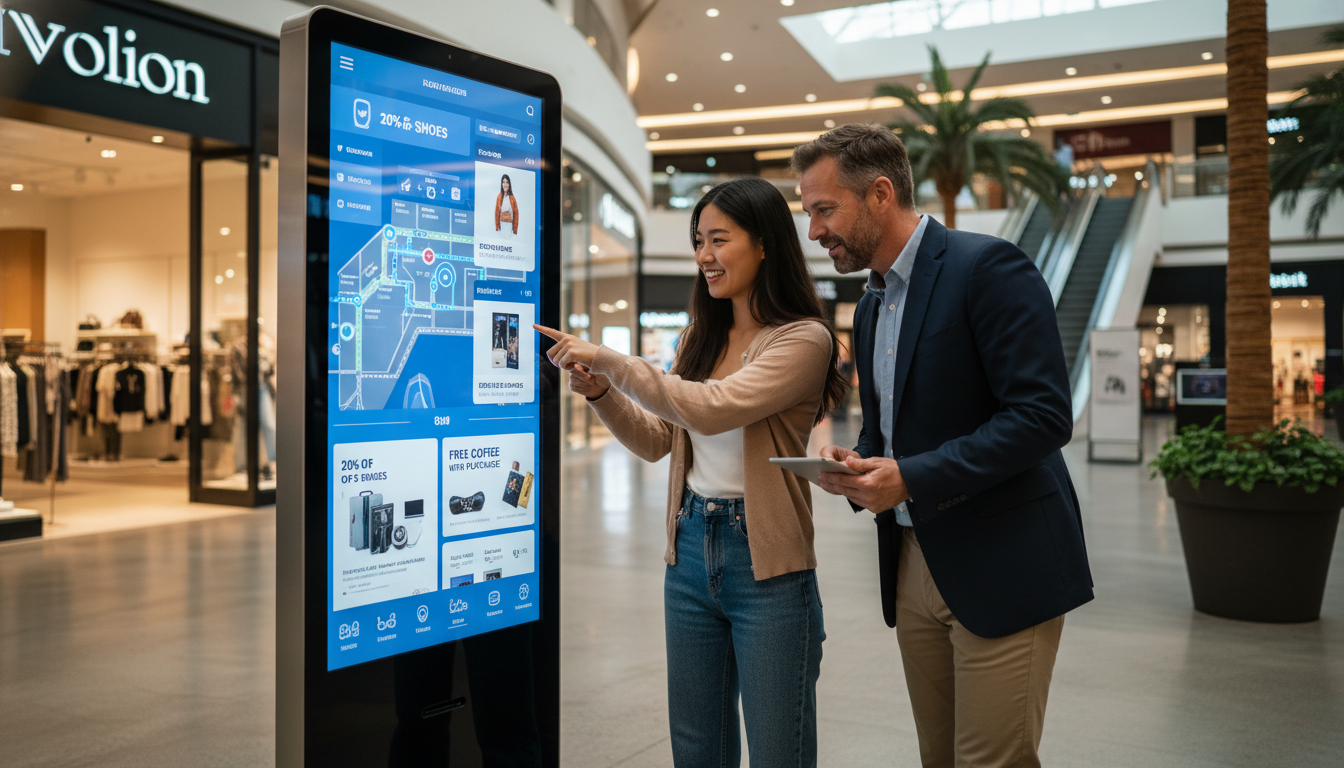
You might have seen Interactive display Kiosk in malls, shopping zones and other high-traffic, bustling areas. Yes, these eye-catchy self-service kiosk terminals display engaging contents of varying formats to catch the attention of customers, to create meaningful engagements.
These self-service machines are deployed in a plethora of industries to execute specific tasks or deliver specific services.
Customers are literally “bombarded” with a lot of information, whether it is a busy junction, the city square or a busy walkway. And, their attention span is too less, you know!
Studies claim that engaged customers can create 51% more revenue than the disengaged customers. Therefore, when your customers are really glued into the content displayed on a self-service machine, the chances of making conversions are far greater.
Let’s have a deeper dive into how these interactive kiosk terminals drive customer engagement, and the latest technologies that can be integrated for the purpose.
Kindly, read through…
What is an Interactive Display Kiosk?
Interactive display kiosks are self-service kiosk terminals that display digital information and help users complete specific tasks or access services without any manual intervention.
These interactive terminals come in various formats like floor standing, wall-mounted or countertop, depending on the purpose and requirement of the service provider.
The kiosk machine is loaded with interactive touchscreens, and other hardware and software components, and they work in unison to enable user interaction, and service delivery.
Features of Interactive Display Kiosk
The kiosk machine houses several features to facilitate seamless customer engagement. And they are listed below.
- Touchscreen interface – comes with a highly intuitive and responsive touchscreen so that the customers can navigate the kiosk machine by gently taping on the screen.
- Task-oriented hardware peripherals – the kiosk comes loaded with various task-oriented hardware peripherals like printers, scanners, card readers, camera etc.
- Real-time content management – the feature allows businesses to modify or update the kiosk content on a real-time basis via a content management software.
- Easy integration – the kiosk machine can be easily integrated with other systems like CRM, HIS, payment gateways, inventory management etc. so that the users are able to have a unified, seamless experience.
- Payment processing – the customer can make payment via multiple modes like cash, card, cardless, mobile apps which makes payment process highly convenient.
- Remote management – The performance of the kiosk machine can be managed from a centralized location by a remote admin.
- Accessibility feature – Panashi Interactive display kiosks are ADA-compliant and are equipped with accessibility features like screen magnification software, braille keyboard, speech-to-text and text-to-speech feature etc.
How Interactive Display Kiosks Improve Customer Engagement?
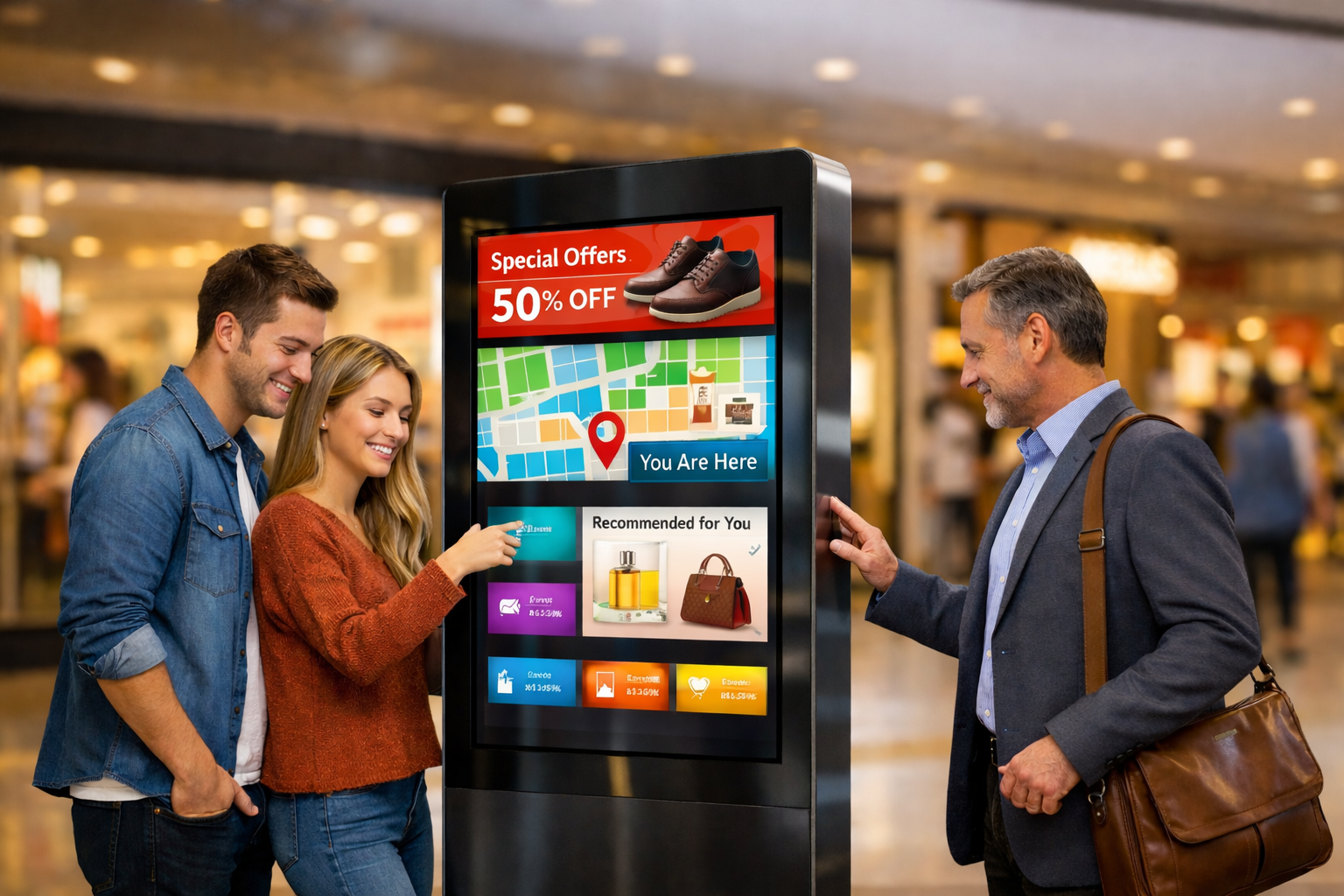
Customer engagement is the way businesses try to connect or engage with their customers. It could be online, offline or a mix of both.
And, here is how interactive display terminals improve customer engagement.
- Personalized content – Interactive kiosk solutions can come up with highly personalised contents based on previous customer visits, preferences, behaviors etc. The unique, tailored content satisfies the taste or preferences of the customers, and they feel like being understood or valued. Hence, they are likely to spend more time with the content, advertisement or promotional campaign. Twilio – the San Francisco-based cloud communications platform – has done an interesting survey on Customer Engagement. One of the key insights of Twilio’s Customer Engagement Report states that “Loyal customers expect personalization.”
- The convenience of self-service – Apart from static display screens, interactive display kiosks offer customers an interactive self-service experience. They can browse through the product listings, gather product-related insights, place orders, check availability of products, etc. with a few taps, without human assistance. If they get most of the desired information from an interactive customer touchpoint, they are going to stay!
- Visually engaging content – When high resolution screens display dynamic, engaging contents in the form of short clips, animated videos, promotional videos etc. they catch the attention of customers.
- Product exploration facility – Product exploration is highly beneficial in domains like retail and automotive industry. Customers love to explore the 3D images of the product, rotate it in different angles, compare features of multiple products, and even play demo videos. These features help them gain a better understanding of the product, and take better purchase-related decisions. It’s no wonder they stay!
- Inclusivity – The interactive display kiosk solutions are equipped with multi-language facility, so they get much attention and engagement in multicultural societies like the UAE, and other middle-east countries. Panashi – design kiosk machines keeping inclusivity in mind, considering the challenges faced by the People of Determination.
- Queue-free engagement – Customers need not stand in long lines to access legitimate brand/product-related information. When installed in busy environments like malls, retail spaces, metro stations, airports etc. the interactive display kiosks serve as the perfect alternate customer touchpoint, preventing the frustration involved in the wait time.
Sense of empowerment – Customers can take their own time, explore product categories, engage in immersive storytelling experiences, compare and gather useful insights of the product. And, this becomes possible without interacting with any employee. This instills a sense of empowerment in customers.
Latest technologies to improve Customer Engagement
Businesses can integrate latest technologies like AI and AR into touchscreen kiosk terminals, and drive customer engagement.
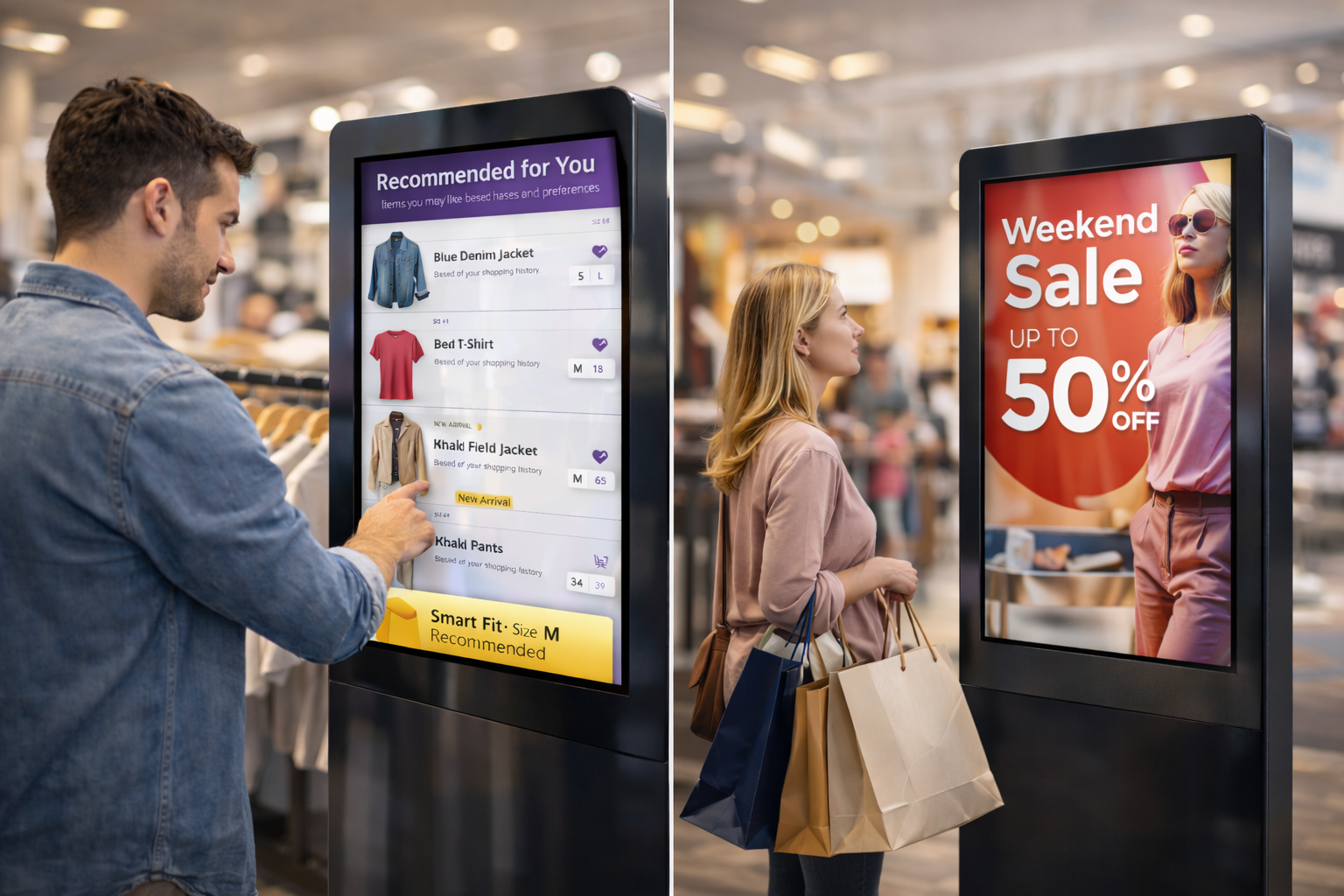
- AI-assisted personlisation – The ML algorithms analyse customer data like previous purchases, customer demography, past preferences and behaviors, and based on the analysed data, offer highly personalized suggestions to customers. These suggestions resonate with customer preferences, and hence, drive engagement.
For example: AI-assisted retail kiosks can offer personalized suggestions and recommendations regarding products based on previous purchases. Studies claim that AI-assisted recommendations can improve the average order value by 35%. In clothing stores, AI-powered recommendations regarding best size/fit, reduces the chances of return significantly. Similarly, self-ordering kiosk machines offer menu recommendations to customers, based on their previous orders, customization preferences etc.
- Augmented Reality – Integrating AR technology into display kiosks can do wonders in retail sector. The technology combines digital content like images, graphical representations, animations etc. with real-world environments, thus creating more interactive, unique and immersive experiences.
For example: An apparels or clothing provider can install an AR-powered smart display kiosk, and offer virtual try-ons for their customers. This feature enables customers to try on clothes virtually, eliminating the need to wear them physically. To add on, it helps them to carefully asses fit and size in real-time. With AR integration, customers can try out several of their preferred designs, back-to-back, saving their precious time. And, it reduces friction too.
The renowned clothing & accessories store, Tommy Hilfiger, has recently come up with Zero10’s in-store AR Mirror, powered by AR technology. Zero10 is an AI and AR solutions provider based in Cyprus
Interactive Display Kiosks – Use-case scenarios
You may deploy these machines in a wide range of scenarios. And they are listed below.
- Retail environments, malls – Interactive display kiosks can be installed at retail aisles, entrances, in front of shops and establishments, aisles of malls, etc. where the footfall is high. Engaging, dynamic contents attract people towards the kiosk machine and they are more likely to interact. The kiosk machine can display a plethora of information like product listings, discount offers, promotional content, loyalty sign ups etc.
- Events, festivals and exhibition – Festivals, event venues, exhibition sites can make use of Interactive touchscreen kiosks for navigation assistance. Visitors can rely on these kiosk machines to navigate these venues without any external support. Apart from navigation assistance, these kiosk machines can display information related to the event, maps, programs, schedules, event agendas, exhibitor information, seating-related information, recreational facilities, and many more.
- Healthcare institutions – Even healthcare institutions like hospitals, clinics, and pet clinics, can deploy interactive self-service terminals to inform patients about their services. Interactive kiosks can display valuable information regarding various departments, availability of medical practitioners, medical camps, events, etc. These kiosk machines can even provide appointment booking facilities for OP patients, making it a highly convenient self-service booking platform. The interactive display terminals can even help with hospital navigation, displaying information about departments, testing facilities, floor maps, etc. In my opinion, interactive display terminals are a must-have for every healthcare provider out there.
- Hospitality – The hospitality industry can make use of interactive kiosk terminals in hotels, resorts, spa centers, etc. to display their services and facilities to potential customers. Engaging views of the rooms, suites, pool, general surroundings, and other recreational facilities catch the attention of visitors and guests.
- Educational institutions – touchscreen kiosk are implemented in colleges, universities and training centers to display courses details, campus maps, facility information etc. The self-service machines can also display events, exam-related information, placement drives etc. to inform both the students and visitors.
- Restaurants – Interactive touchscreen terminals work in a great way for restaurant businesses to display their menu items in a highly engaging and creating manner. Quality images and supporting description about ingredients, customization feature, drive customer engagement. Renowned restaurant chains like McDonalds is working on the voice-ordering technology, so that he customers can make voice-based orders at the kiosk terminal. Voice-assisted ordering would revolutionize the overall restaurant experience, in the coming years. McDonald’s partnership with IBM is a much talked-about development in the restaurant industry. You may read about the same, here.
- Transportation hubs – Interactive display machines can be installed in transportation hubs like airports, transit terminals, bus depots, metro stations etc. They display arrival/departure timings, real-time schedule changes, and serve as effective information portals. Passengers can browse through the timings, routes, and services, and keep themselves updated without seeking any external assistance.
- Smart cities – Smart cities can install public access kiosks or digital self-help stations for the aid of residents and visitors. Interactive Smart city kiosks can display city maps, routes, offer real-time traffic updates, news and developments, details regarding events, etc. via large high-resolution screens.
What differentiates Interactive Display Kiosks from Digital Signage Kiosks?
By appearance, both these kiosk machines may look identical. But, they differ in purpose. And, the differences are listed in the table below.
In a nutshell, the interactive display kiosks are meant to Inform and Engage, resulting in direct user interaction. Whereas, the digital signage kiosks are designed only for the purpose of information disbursal, in which, user interaction is not necessary or encouraged. And, hence they needn’t have to accommodate costlier touchscreens.
Feature | Interactive Display Kiosks | Digital Signage Kiosks |
User Interaction | Touch-assisted, allows user input and navigation | Not interactive, only displays the content or information. |
Functionality | Wayfinding, product-browsing, order-placing, ticketing, etc. | Display ads or promotions, information disbursal |
Purpose | Enables user engagement through interactive contents | Only informs, educates the users |
Hardware | Includes touchscreen, card reader, printing and scanning devices etc. | Comes with display screens of varying sizes, and media player |
Software | Loaded with various applications for UI, UX | CMS for media playback |
User involvement | High involvement | No direct involvement |
Analytics | In-depth analytics possible with the help of kiosk management software | Analytics possible with external sensors, AI camera, and CMS |
Pricing | Feature-loaded for service delivery, hence they are priced higher. | Cost effective compared to interactive touchscreen kiosks. |
For additional information on Digital Signage Solutions, please visit our blog here.
Conclusion
Interactive display kiosks are on the path of redefining the way customers are interacting with businesses. With the advent of latest technologies like AI and AR, these interactive terminals create highly personalised, immersive experiences that resonate well with the customers.
The interactive kiosk terminals not only display engaging content, they create the right scenarios and circumstances that persuade the customers to engage and convert.
Apart from streamlining service delivery, they are designed to gather the crucial customer data that helps you take smarter business decisions, and improve CX.
Whether you are in the retail, hospitality, entertainment, transportation or even public sector, these machines are configured to drive growth and build long-term brand loyalty.
Technology is constantly evolving, and so are customer expectations. Keep this in mind!