
How Hotel Check-in Kiosks help the Middle-east Hospitality Industry?
When it comes to Middle-east hospitality industry – it’s a total package of bustling activities, experiential tourism, and cultural heritage. Visitors around the globe, in large numbers, visit various middle-east destinations for both leisure and business purposes.
UAE and Saudi Arabia attract around two-third of the total visitors to the middle-east, the UN World Tourism Organisation data claims.
In order to accommodate this tourist inflow, the middle-east hospitality industry has to implement smarter, faster, and more automated guest-service solutions that can scale without compromising the guest experience.
Hotel check-in kiosks can play a major role in this regard.
This blog covers how Hotel check-in kiosks help to improve the guest experience, the overall hotel efficiency, and revenue. Read on…
What is a Hotel check-in Kiosk?
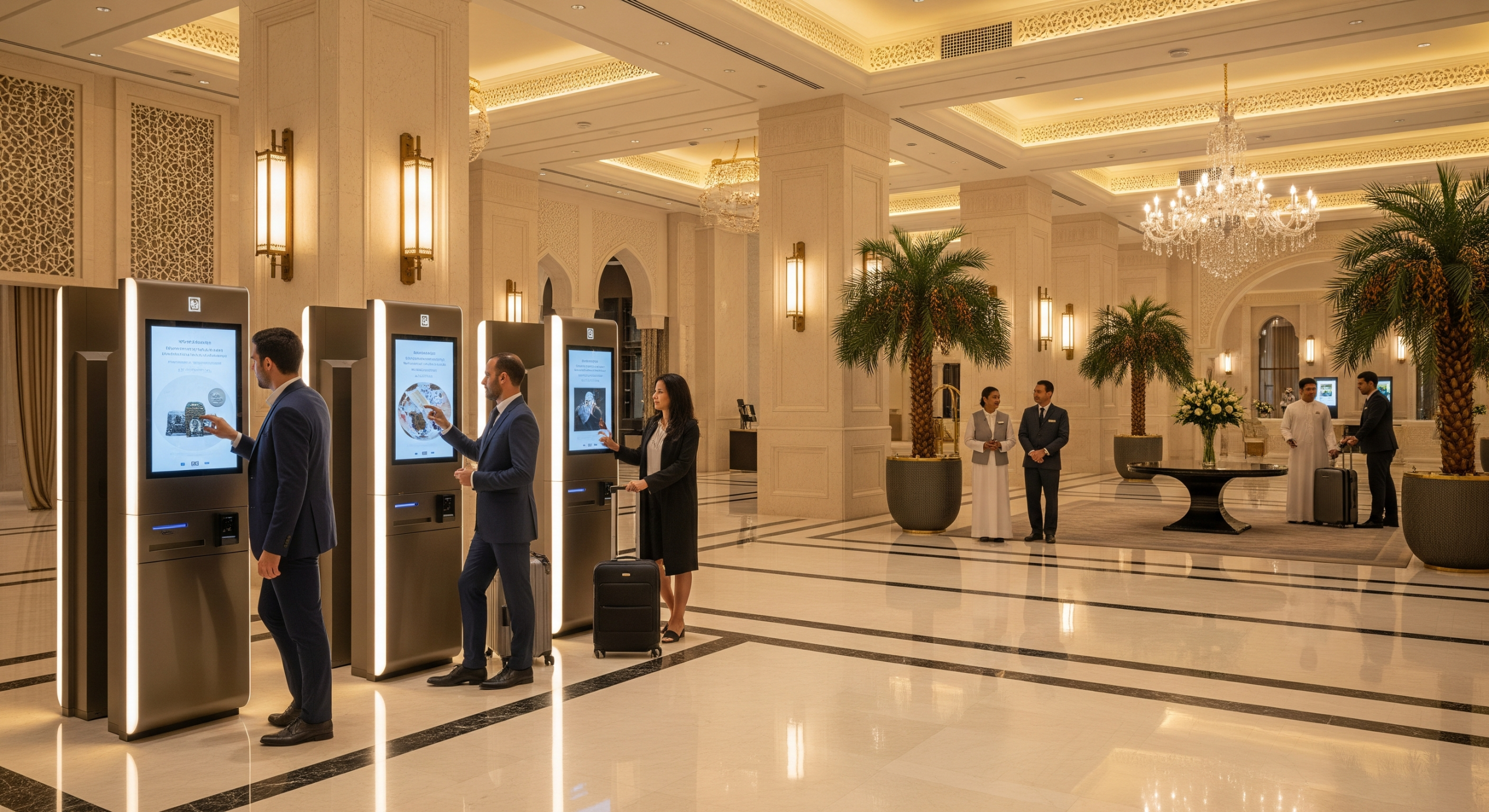
A hotel check-in kiosk is a self-service kiosk terminal deployed in a hotel lobby that allows guests to perform check-in/checkout without any front-office assistance.
These automated check-in machines serve as digital reception points, so that the hotels can bypass the conventional, human-assisted front office-based, check-in operations.
What are the components of a Hotel Check-in Kiosk?
A hotel kiosk is loaded with all the necessary hardware and software components to improve the overall guest experience in hospitality settings.
Hardware components
- Touchscreen Display – Facilitates guest interaction with the kiosk machine.
- Passport and ID scanner – scans, passports, Emirates ID and other National IDs
- Payment Terminal – Allows booking and service-related payments via card, cash, cardless, mobile app modes.
- Printer device – Prints receipts, registration slips, and check-in confirmations.
- QR code/ Barcode scanner – allows booking confirmation via QR Code scanning.
- Key card dispenser – dispenses the hotel key card instantly after check-in.
- Key drop facility – allows secure key drop during checkout.
Software Components
- Kiosk operating System – Windows, Linux or Android-based operating system.
- Hotel check-in application – the guest interaction interface that handles check-in/checkout, bookings, payments etc.
- PMS integration module – connects to hotel PMS system to sync reservations, guest profiles, payments etc.
- Reporting and Analytics Dashboard – helps hotel administrators track kiosk usage, monitor guest check-in volume, peak hour kiosk interactions etc.
- Upselling and Promotion Engine – Perform upselling like room upgrades, dining offer, local sightseeing etc.
- Payment Gateway Integration – allows secure, encrypted payment (card, wallet/UPI, contactless)
- Remote management application – helps in monitoring the performance of the kiosk, update kiosk content, and push timely software updates.
How Hotel check-in kiosk benefits the hospitality industry?
Dubai is the gateway to the middle-east, I would say without any iota of doubt. The data published by the Dubai Department of Economy and Tourism (DET) states that Dubai received 9.88 million overnight visitors in the first half of 2025.
The number suggests a 6% rise compared to the previous year data. The strategic geographical position of Dubai helps to attract visitors and tourists from around the globe.
According to Skyscanner (the renowned travel website), every day, around 2000 to 2500 flights land on the runways of Dubai. This point towards a yearly flight estimate of approximately 900,000.
According to KPMG’s Hospitality report on Dubai’s tourism surge, 88% of the respondents opined modern technology has a major role in the overall hotel experience. KPMG cites the rise in demand for personalised services and unique experiences, in the report.
Now, here are those benefits.
1) Faster and Smoother Guest check-in
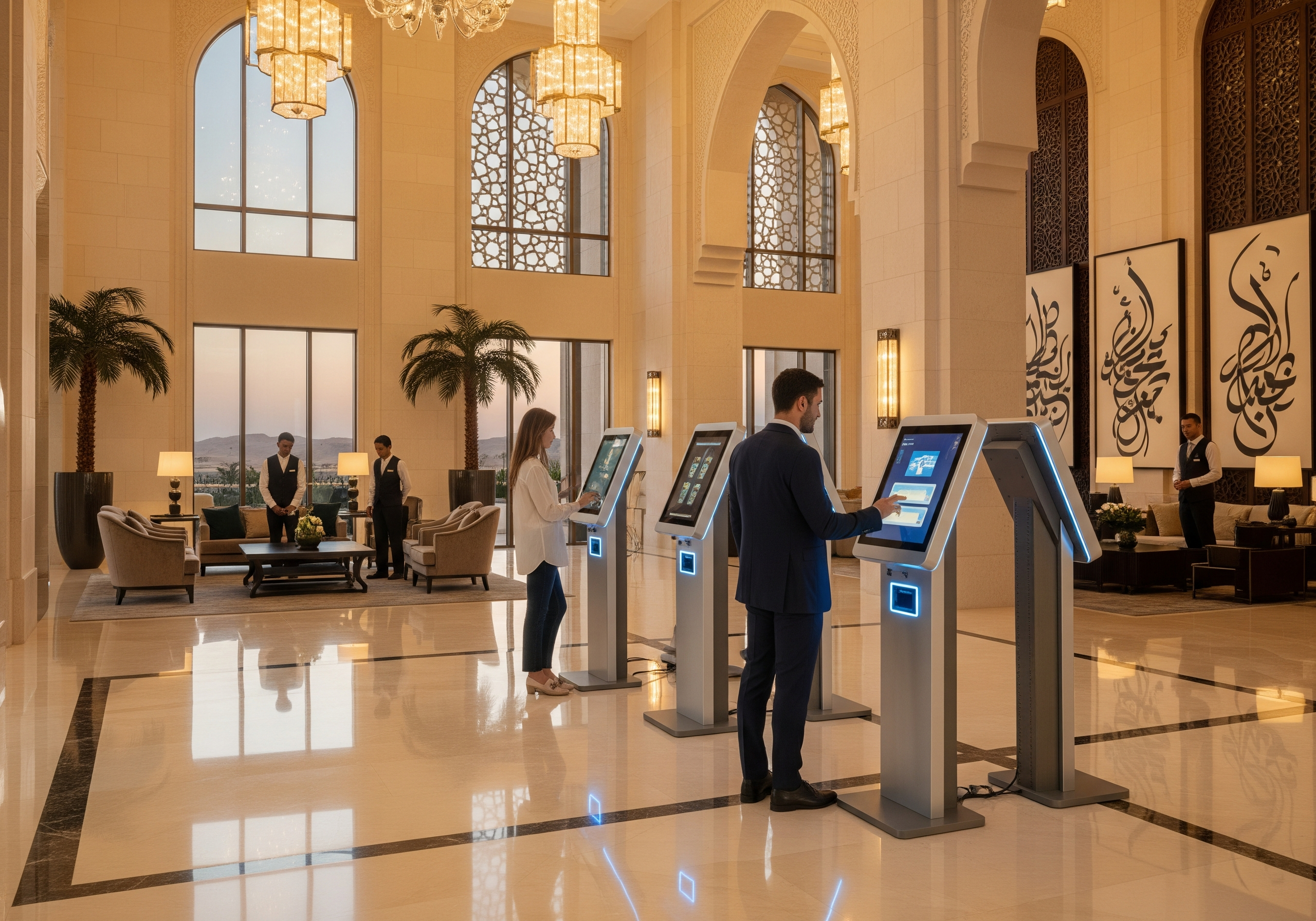
Once the guest arrives at the hotel, the person need not wait at the reception anymore. Instead, the guest can access the kiosk machine, and perform the automated check-in with ease.
When the guest selects the desired room or confirms an existing booking, the kiosk completes the verification process and dispenses the room keycard. Hence, no waiting at the lobby, no interactions with the reception staff. The check-in process become faster and smoother, which creates a seamless guest check-in experience.
In fact, Hotel check-in kiosks also offer the opportunity of contactless check-in for guests.
Apart from guests, contactless check-in is a healthier option for your hotel staff too. The positive experience would reflect in guest reviews and guest feedback opinions too.
Hospitality survey conducted among hotel guests reveal that 71% of the participants prefer contactless check-in experience
2) 24/7 Automated check-in for early and late arrivals
Tourists or guests may arrive late at night or early in the morning. Guests never appreciate waiting in the reception or standing in lines to perform check-ins at odd hours.
Hotel check-in kiosks automate the age-old, time-consuming process of form-filling, staff interactions etc. thereby, saving the precious time of guests.
The guests can straightaway access the check-in kiosk, select their preferred room/s, make payment, grab the key card, and proceed towards the room in minimum time.
The kiosk handles the task of guest check-in efficiently when the hotel operates with limited number of reception staff, especially during midnight and early morning hours.
As a result, the guests need not worry about late or early arrivals – their key is always ready!
3)Multilingual support for International travelers and tourists
Middle-east attracts people largely from Asia (India), Russia, GCC, European countries like Germany, France, UK, and even South-east Asia. The region attracts people of diverse culture. UAE is a multicultural with a striking majority of Indian population. Hotels are destinations where this multiculturalism is celebrated.
The Hotel check-in kiosks are loaded with multiple language facility, which allows guests to navigate the check-in process in their preferred language.
The multilingual facility of Hotel check-in kiosk is particularly useful in tourist destinations like Dubai, Abu Dhabi, Riyadh, Jeddah, Doha and Muscat.
Whether the visit is for travel and sightseeing, or business purposes or even in connection with pilgrimage, the multilanguage facility offers hassle-free kiosk navigation.
4) Improved revenue generation through upselling & cross selling
Hotel kiosk machines are not just automated guest check-in platforms. They also help hotels generate revenue through upselling. These machines display engaging visuals of room-interiors, hotel amenities etc. to nudge or persuade guests to accept additional offers or services without sounding too pushy or salesy.
People most often don’t appreciate the feeling of being purchased or bought, but they are ready to buy experiences.
I would like to mention below some of the tried-and-tested, kiosk-driven upselling strategies below.
- Suggestive room upgrades – Based on guest’s room preferences, the kiosk system suggests room upgrades for discounted extra payment. The kiosk presents colorful visuals of the room, amenities and the unique benefits it offers, convincing the guests to go for it!
For example: Upgrade to a Beach View Room for AED 100 or Upgrade to a Lake View Room for AED 50. Or maybe, Enjoy a Suite for just AED 200 extra per night.
Mind you, the kiosk offers “experiences” as hot deals for the guests to consider.
- Display special add-on offers – Hospitality kiosks can display special add-on services for guests like breakfast or dinner packages, spa facilities, DJ night offers at discounted prices. Most often, guests are lured into accepting these deals, as they perceive value. And, these add-ons serve as significant drivers of revenue.
- Cross selling 3rd party services – The hotels can partner with 3rd party hospitality providers like travel and tour agencies and come up with exciting offers like local sightseeing, dessert safari, car rentals etc.
5) Guest Data Capture and Analytics
Through check-in interactions, the hotel administrators can gather crucial information regarding guest preferences. Hoteliers can tap into guest’s room and service preferences, real-time guest flow, peak hour kiosk interactions, etc. The information is crucial as it helps hotel businesses to optimize their pricing strategies, services, marketing initiatives etc.
Based on peak hour guest flow, hotels can regulate their staffing requirements. The data-assisted staffing helps hotels to assign additional staff to meet peak-hour requirements. This not only helps visitors but hotel employees too, as the employees are freed of additional responsibilities. Ultimately, data capture helps to ensure employee productivity in hospitality settings.
6) Improved staffing allocation
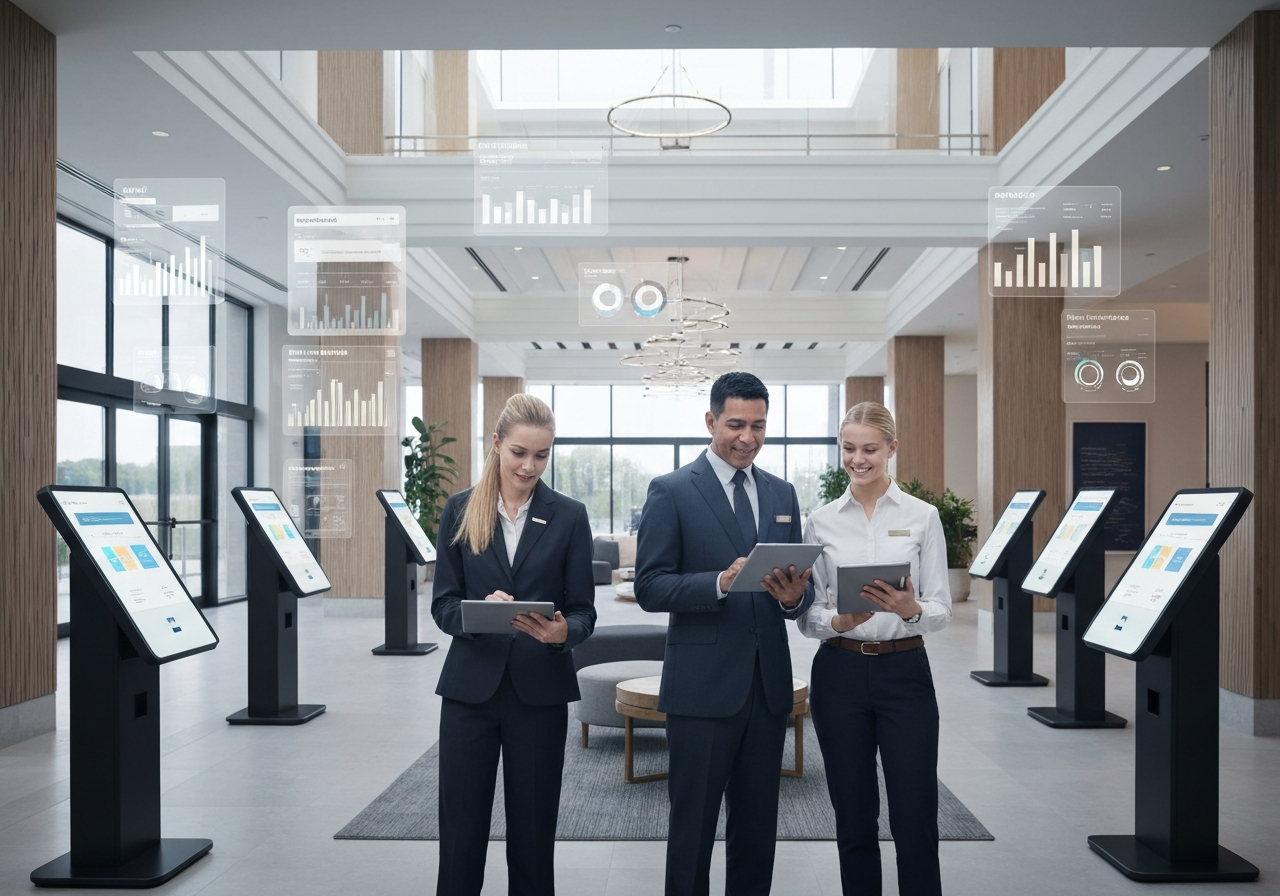
If you are into middle-east hotel business, you know how labour shortages affect the industry. The existing number of labour talent is not enough to meet the growing needs of the hotel and hospitality industry.
The conventional front-office staff-assisted guest check-in is labour-dependent, and requires qualified hospitality professionals.
Around 12% of the total UAE workforce comes under the hospitality industry. This accounts to a staggering 8,09,000 people.
Hiring the right people, and providing them training involves significant investment.
The hotel check-in kiosk solutions operate 24/7, without any break. With regular maintenance, the kiosk system can handle guest check-in tasks with top-notch efficiency.
7) A tech-forward branding strategy
The visitor gets the first impression of the hotel the moment the person arrives at the lobby.
Deploying the self-service check-in kiosks at the hotel bobby sends a clear message of sophistication and innovation. The sleek, aesthetically-designed guest check-in kiosk is a clear indication of the fact that the hotel embraces smart technologies and stands for improving guest experience.
Moreover, these automated guest check-in solutions perfectly cater to the aspirations of the young, tech-savvy Gen Z and millennial populations.
Technology Developments in Hospitality (2026): What to Look Out For
1) One-time contactless hotel check-in facility
The one-time contactless hotel check-in system bypasses the conventional reception-based check-in formalities, thereby, allowing visitors to check-in before they arrive at the hotel. The system allows guests to check-in from their smartphone devices, by uploading the necessary documents and the biometric information.
The guest check-in solution simplifies the hotel check-in process, significantly reducing the check-in time. This improves the guest experience. The facility becomes highly useful for repeat visitors. Sheikh Hamdan bin Mohammed has launched the new initiative in December, 2025. In 2026, we will witness the integration of this Hospitality technology in Dubai city hotels and accommodation facilities.
The Dubai Department of Economy and Tourism (DET) partnered with other private tech-providers to roll out this solution. The initiative is part of a bigger program – yes, you guessed it right – the Dubai Economic Agenda, 2033.
2) Agentic AI in hospitality
The big thing to watch out for in 2026 is the use of Agentic AI in hospitality.
Agentic AI systems serve as digital assistants or autonomous agents that can perform hospitality tasks involving several steps without human intervention. These tasks include assigning goals, decision-making, initiating action etc.
Agentic AI communicates with several parties like APIs, applications, and users to perform goal-oriented tasks.
These Agentic systems can be successfully used in the hospitality sector to automate a wide range of tasks. I have included some of the major ones below.
- Pricing optimization – conduct real-time pricing adjustments based on multiple factors like booking trends, competitor pricing, hotel occupancy information etc.
- Staff training agent – The Agentic AI can conduct hospitality staff onboarding and training which involves procedure-based interactive training, progress-monitoring, etc.
- Automate staff-assisted email booking operations – Access booking queries via emails, verify real-time availability, and perform personalised interactions with customers.
- Guest Experience planning – curate complete guest experiences based on individual preferences like scheduling sightseeing trips, room cleaning, conducting reservations, spa or massage bookings etc.
- 24/7 personalized customer service – Instead of giving passive replies to guest queries, Agentic AI has the capability to offer 24/7, proactive guest support by interpreting guest intent.
- Building guest loyalty with Agentic AI – It’s not just about creating memorable experiences during stay. Staying connected with guests even after the stay matters a lot in hospitality. The conventional ways of staying connected is by sending newsletters or promotional contents via emails. Your guests receive dozens of emails a day, and these conventional, generalized emails get little to no guest engagement.
Hospitality AI agents simply redefine the existing scenario.
For example: Sending a personalised message related to any of the guest preferences is far effective than a generalized “thanksgiving” message. Suppose, the guest had already enquired about a local sightseeing package. The AI agentic system can send a personalised message to the guest over WhatsApp highlighting the most popular sightseeing destination at a discounted price, on the next stay. When the messaging is aligned with the preferences of the guest, it is far more likely to make an impact, resulting in better engagement.
Agentic AI is a context-based, continuous learning platform. It has the potential to radically transform hospitality operations by offering seamless and personalised guest support, automating hospitality workflows, and serving as a data-backed revenue generation platform.
For more practical insights on “Agentic AI for Hospitality”, please visit the ET Hospitality World website here.
3) Holographic AI avatar check-in
Well, I am really excited for this, as it has the potential to revolutionize the check-in experience.
The Holographic Avatar for hotel check-in could perfectly cater to the tech-forward, sophisticated outlook of the middle-east hospitality businesses.
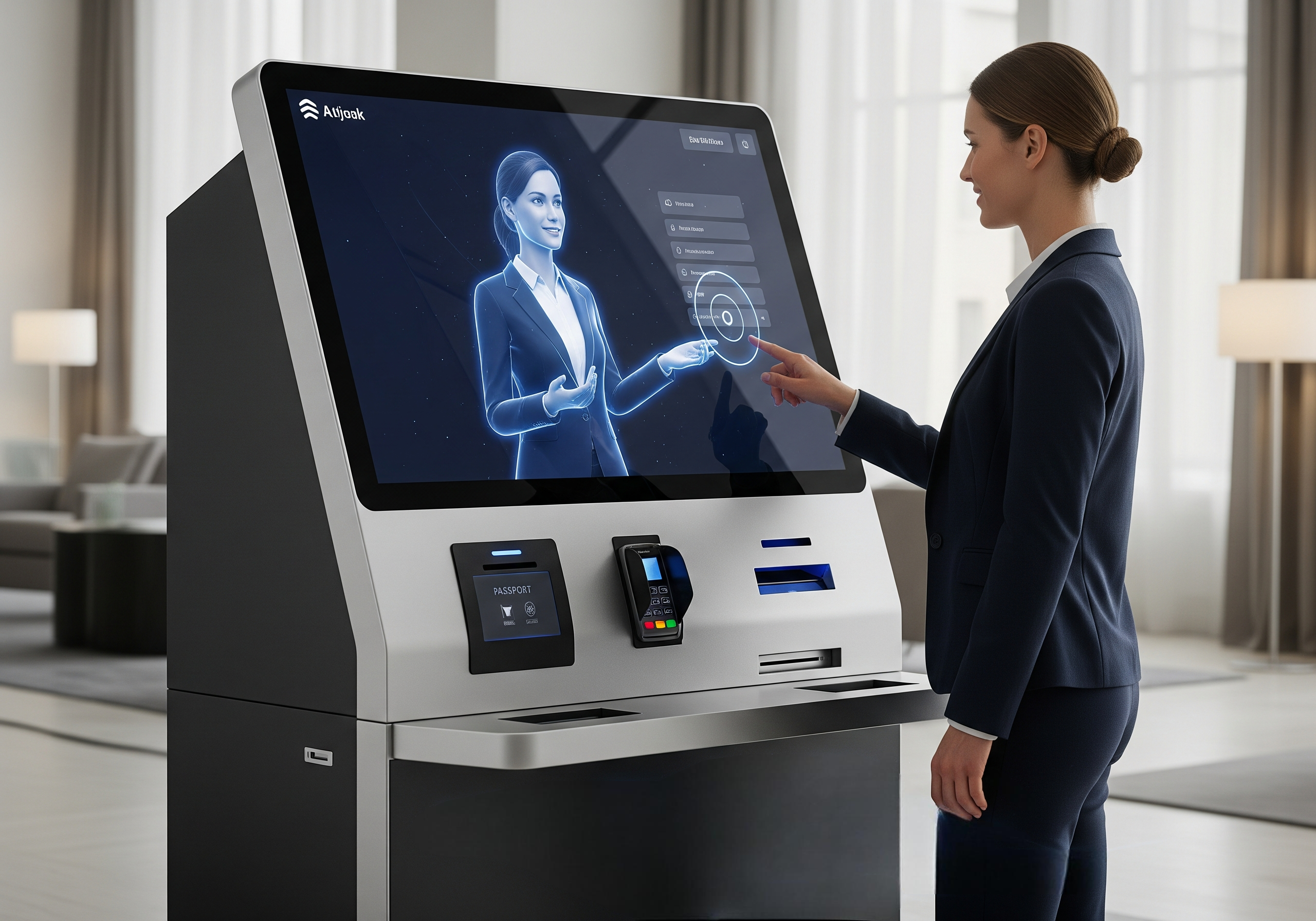
The AI-powered holographic Avatar can be installed at hotel reception to automate the guest check-in process. The Avatar facilitates guest interactions through human-like conversations. It helps guests to perform automated check-in or checkout, performs upselling through voice interactions, like booking a taxi to the airport, etc. The guests can even ask general questions to the Avatar like the “best restaurants in the region” or “nearest railway station” etc. The Avatar comes up with the apt solution for every query in an instant. There is a Key Creator facility to create the room keycard, once the guest receives the booking confirmation. It’s almost similar to communicating with the hotel reception staff, the difference is it’s an AI-powered 4K High resolution 3D holographic visualization of a human.
The Avatar improves guest satisfaction by expediting the check-in process. To add on, it creates a real-time, immersive experience, which makes the entire check-in process unique and memorable.
One such Avatar is implemented at the hotel named Aiden by Best Western Lolland in Denmark. The Avatar is implemented by collaborating with multiple tech and hospitality players like Holoconnects, Mews, RAVATAR and CIC Hospitality.
To watch a demonstration of the Holographic AI Avatar check-in process, please watch the YouTube video shared by Holoconnects, here.
This is what Matthias Tanski (CEO of CIC Hospitality) has to say about the Holographic AI avatar.
“One of the main challenges that we are tackling when it comes to hotel operations is staffing, it’s tough. This technology kind of steps in and helps with the check-in, answering questions, and even creating room keys.”
4) Robots in Hospitality
Robots have already made their presence known in the Hospitality industry. Robots have multiple roles in hospitality, some of them take up the role of greeters in hotel or restaurant receptions, others handle the serving task. Robot cleaners are used to perform floor-cleaning (disinfection) in hotels and restaurants.
Mordor Intelligence published an interesting report on Hospitality Robots market size and share. As per the report, in 2025, the Hospitality Robots market size is valued at USD 0.61 billion. And the value is expected to reach USD 1.84 billion, by 2030, indicating a Growth Rate of 24.72%.
In 2023, Dubai Road and Transport Authority (RTA) in collaboration with Talabat UAE, and Dubai Integrated Economic Zones Authority (DIEZ) launched the autonomous food delivery robots in Dubai Silicon Oasis. The robot was named Talabot. The purpose of the launch was to deliver restaurant orders to a gated community called Cedre Villas.
Yotel hotels employ robots for luggage handling and room service. Yotel’s NYC hotel makes use of a robot named Yobot to automate luggage-handling, thereby, helping guests to securely store and retrieve their luggage.
Yotel has implemented robotic room service in their hotel in Singapore. The robots named Yolanda and Yoshi deliver food and drinks to guest rooms, very similar to human-assisted room service. These robots can use elevators and they move on wheels to reach your room entrance.
Similarly, Yotel Tokyo has two robotic front office members named Tomo and Aibo. The two of them facilitate room service and guest-escort tasks.
Robotic automation helps to free up hotel staff for more important, value-based tasks, which helps to improve the hotel’s operational efficiency. Moreover, these robots offer a contactless guest experience in hotel settings which improves the overall hygiene standards.
To Wrap up
The economic diversification initiatives like the Saudi Vision 2030, Dubai’s Economic Agenda (D33) will have a profound impact in the middle-east hospitality industry.
Travel experts opine that the passenger numbers to the middle-east are expected to increase in the coming years. The launch of the unified Schengen-style visa (expected in 2026) and multiple airport investments in Dubai and Riyadh would attract far more visitors to the middle east in the next decade.
Hotel check-in kiosks can play a remarkable role in handling this surge in visitors. It’s a great time for investing in these hotel check-in automation machines.
Our team at Panashi would love to offer the necessary assistance on hotel check-in kiosk installation. For free consultation, visit our official Panashi website.