
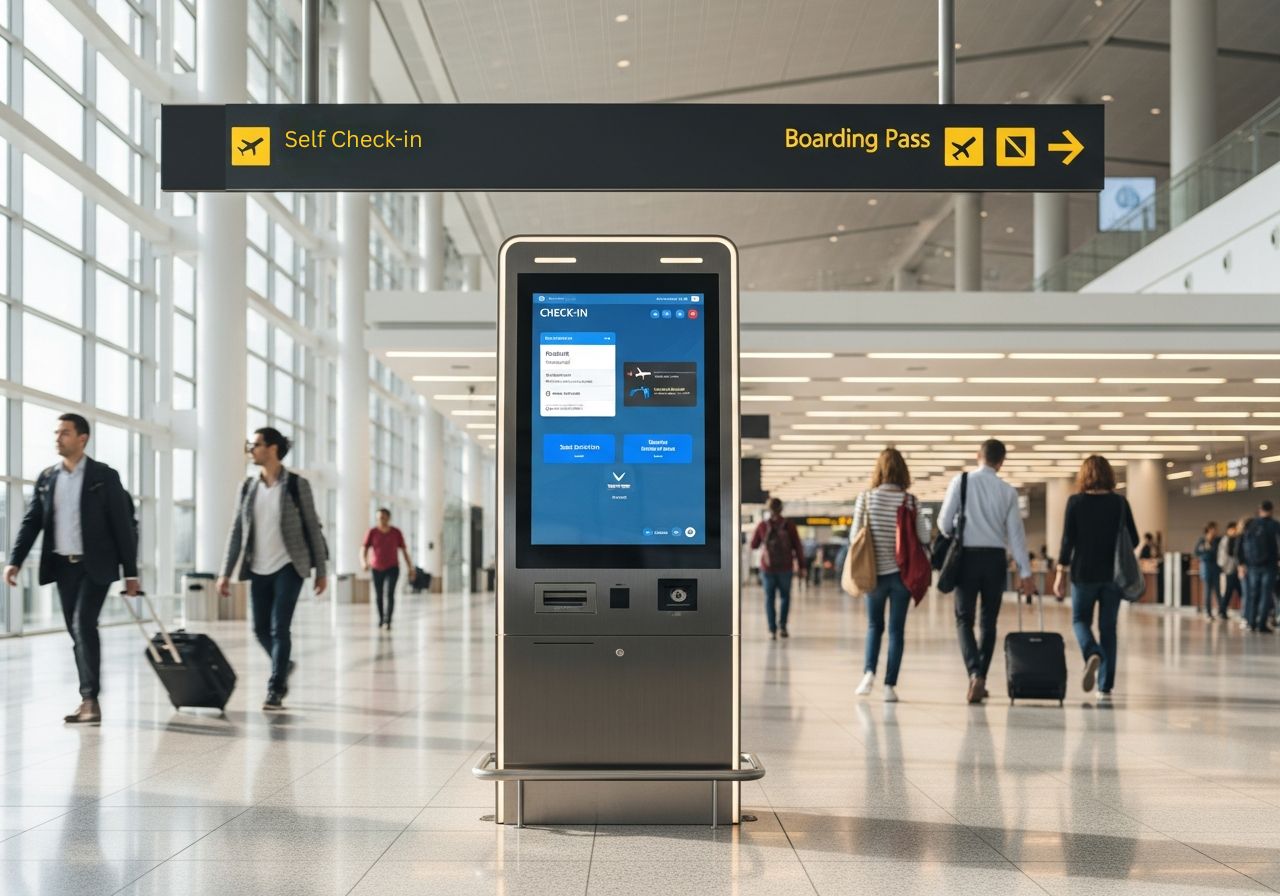
How Border Security Kiosks Reduce Wait Times Without Compromising Security
Gone are those days of lengthy immigration queues and the commanding looks of the paper-shuffling border agents. Border security kiosks are transforming the once human-centric, time-consuming border check-in formalities into a way smoother, technology-driven automated experience. These smart kiosk terminals combine automated processing, biometric scanning and document verification, to make border crossing highly smooth and secure.
Airport congestions, migration trends, heightened security regulations have resulted in more airports and border entry points implementing a kiosk-driven traveler verification strategy. And, this trend is particularly evident in the European Union.
Read on to understand more about these border check-in kiosks, which includes their features, benefits, and their growing importance in the European context.
What is a Border Security Kiosk machine?
A border security kiosk or an Automatic Border control Kiosk is a self-service terminal that facilitates secure and efficient border-crossing of travelers at international borders or other entry points.
The kiosk solution is usually deployed at international airports and seaport hubs, transit terminals, borders check-points etc. where travel-related or border-crossing verifications are mandatory.
These automated border security solutions streamline certain crucial tasks related to border management and traveler processing like identity verification, document verification, and security checks.
Automated border control – Market projection
Based on the research conducted by Markets and Markets, it is evident that the automated border control market has significant growth potential. And, here comes the projection.
The automated border control market (global), as of 2025, has achieved a market value of 2.56 billion US dollars. And, by 2030, the value is expected to grow to reach 5.03 billion US dollars, achieving a CAGR of 14.4%.
The market includes border control automated machines and technologies like border security kiosks, e-gates, and other automated systems for border control and management.
The doubling of the market size in a span of 5 years is driven by several factors like:
- How Border Security Kiosks Reduce Wait Times – Find Out Now
- demand for improved and stringent border security
- faster and efficient traveler processing
- Increased adoption of AI and biometrics technologies in border control.
- Border control security norms and regulations
Features of a Border Security Kiosk
These kiosk machines are feature-packed to streamline border-crossing formalities.
- Biometric authentication – A high-resolution facial recognition camera captures the live image of the traveler, and is compared with the information stored in the database. The fingerprint scanner captures the fingerprint of the traveler for verification.
- Document verification – A document scanner scans passport, Visa or National ID or other travel-related documents to verify document legitimacy.
- Real-time database integration – The kiosk machine allows real-time integration with border-crossing or immigration databases or watchlists.
- Barrier or eGate integration – The border kiosk solution can be integrated with gate or barrier systems. The gates open only after the successful document and identity verification.
- Multilingual touch interface – The international travelers can pick their desired language from a list of languages for kiosk navigation.
- Receipt printing – The users can easily print the receipt of their transactions via the kiosk machine.
- Payment module (if needed) – The border security authorities may integrate a payment module into the kiosk machine based on the border control policy or in connection with any specific use-case.
- ADA compliant design – Border security kiosks come with ADA-compliant designs to accommodate travelers with disability.
Why Border Security Kiosks are gaining more importance in European context?
The relevance of Border Security Kiosks is rising, particularly in Europe. And, there are several valid reasons for the same.
Complexities of Schengen area
- As internal checks within EU are minimal, the border countries face more security-related pressures.
- Border security kiosk solutions provide maximum security at the borders without restricting the flow of legitimate EU passengers.
The need for contactless solutions
- After the pandemic, the need for contactless solutions for document verification is on the rise in EU.
- Biometric kiosk solutions allow contactless passenger verification eliminating manual delays.
Prevention of cross-border crimes
- Well-equipped kiosk systems can track suspicious patterns or trends in the form of illegitimate entry or even human trafficking via the borders, 24/7.
High migration trend
- The increase in flow of migrants from Africa, Asia and the middle-east.
- The need to distinguish asylum seekers and legitimate migrants has gone up.
Automated kiosk solutions can easily distinguish visitors and passengers based on a wide range of categories, resulting in more efficient operations.
Counter terrorism strategy
- In 2024, 14 Member States of the European Union, had claimed 58 terrorist attacks – reports Europol.
- The kiosk system can be easily integrated with National Intelligence systems, which makes counter terrorism initiatives more effective.
- Allows real-time screening of individuals against large database and other international watchlists.
Brexit-related requirements
- After Brexit, the UK citizens have to undergo more stringent measures to plan visits to EU. As a result, UK-EU borders experience more passenger verification formalities.
- This adds more burden on airport and seaport administration staff.
Digital transformation initiatives in European Union
Digital transformation initiatives of the EU region like the Digital Single Market strategy, EU-wide biometric data integration, and even e-government initiatives have propelled automated border checking across borders.
Economic, trade and tourism competitiveness
- Faster, efficient and secure processing at borders is vital for the EU to project it as the global hub of trade and commerce.
- Tourism industry thrives only when travelers and visitors experience seamless border-crossing experiences.
Congestion in EU airports
- Major transit airports in Europe like Frankfurt, Amsterdam Schiphol Airport, Munich Airport, Barcelona Airport are already congested due to excessive transit volumes.
- The processing time at airports impacts the boarding of connection flights.
Upcoming border-crossing regulations
- ETIAS (European Travel Information and Authorization System) – a mandatory travel approval system for Visa-exempt travelers who wish to travel to 30 European countries like Sweden, Finland, Norway, France, Germany and others. The countries include Romania, Cyprus and Bulgaria.
- EES (Entry/Exit System) – Once operational, the automated EES system will necessitate the registration of 3rd country nationals (both visa and visa-exempt) whenever they cross any of the EU external borders. Entry-Exit System – European Commission. The system would register the traveller credentials like name, travel document details, biometric information, entry and exit information, etc.
Through Border Security kiosk implementation, the EU authorities will to able to execute border management more efficiently. That’s for sure!
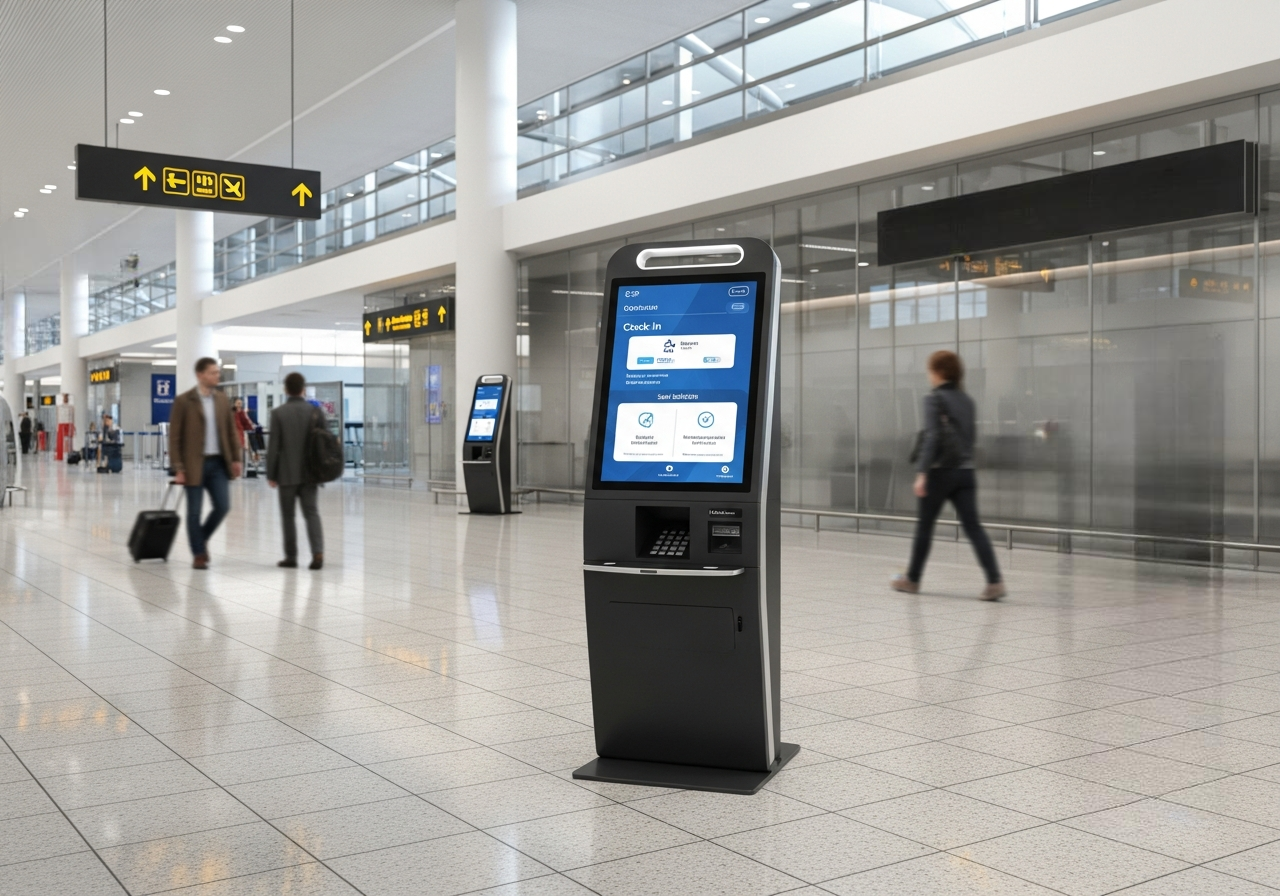
Benefits of Border Security Kiosk machines
I’ve listed the benefits of Automatic Border control Kiosks below. Kindly read through.
- Reduced wait times – Automated document and identity varication via the kiosk terminal speeds up the verification process. Thus, travelers needn’t have to wait for long at the immigration counters or at other entry points. When multiple kiosk terminals are deployed at the facility, parallel processing attends to the needs of multiple travelers at the same time. This significantly reduces traveler wait time.
- Faster processing speed – Self-service technology combined with biometrics-assisted verification and real-time data integration improve the processing speed.
- Improved passenger flow – Faster processing speed and smooth kiosk interactions with no or minimum human intervention improve the passenger flow. The improved passenger flow helps in a great way to meet the peak hour demands of airports and seaports.
- Improved traveler experience – Reduced wait times, faster and efficient biometric-assisted verification, contactless interactions, multilanguage facility – all these aspects improve the overall traveler experience.
- Heightened security – the biometric authentication capability, advanced document verification feature, real-time data verification against international database or watchlists, enhance the security and reliability of the system.
- AI-powered real-time screening – For strengthening security, the Border security kiosks can be integrated with an AI-powered camera. The camera keeps track of facial characteristics, unusual/suspicious behavior, and alerts the immigration or border verification authorities instantly. Thus, if any traveler requires additional inspection, the border security officers can rise to the occasion within seconds.
- Organized, systematic data collection – The kiosk system collects traveler data, like document information, biometric data etc. in compliance with border security regulations and norms. The acquired data can be stored digitally in a centralized database.
- Real-time tracking – The border control authorities may conduct real-time tracking of suspects or high-risk individuals, if they fall under high-risk categories.
- Integration with eGates and Barriers – The border control authorities can easily integrate the kiosk system with eGates and Barriers to further automate and simplify the operations.
As part of innovating Saudi’s aviation industry, the King Abdulaziz International Airport, Jeddah had recently installed advanced AI-powered eGates. These eGates would streamline real-time screening of passengers, thus improving the passenger throughput.
- Scalable solutions – EES kiosks are perfectly scalable. An increase in the flow of travelers in the future can be easily met by adding more kiosk terminals to the existing system.
- Deployment flexibility – The kiosk terminals can be deployed in a wide range of environments like airports, seaport, cruise terminals, railway terminals, border entry points, etc. Unlike the traditional verification counters, they don’t consume much space. And, if situation demands, the authorities may even redeploy or transfer the machines to other locations with minimal effort.
Conclusion
Border control is evolving, and automation at its core.
The border security kiosks offer a smooth, secure and highly reliable border-crossing experience to the legitimate traveler. Moreover, these terminals bring about more of a private, self-guided travelling experience, reducing manual intervention to a great extent.
World-renowned airports and seaports are always on the lookout for ways to improve passenger/traveler convenience, without compromising on the security aspects. And, these kiosk terminals offer a future-forward solution that redefines the passenger verification process.
Investing in such technology isn’t just about faster processing—it’s about creating smarter, safer, and more resilient borders for the challenges ahead.
For airport kiosk automation, you may kindly visit our official website.